

The Myth of Multi-SIMs: A Hard Lesson Learned
I remember a chaotic layover at Indira Gandhi International in Delhi a few years back. My flight to Kathmandu was delayed, and my phone, reliant on a local Indian SIM, had just run out of data. I needed to rebook, but the airport Wi-Fi was spotty at best, and the SIM card kiosks were all closed for the night (most close around 10 PM, a detail I learned the hard way). Panic set in. I’d made the classic mistake of relying on a single, local physical SIM for a multi-leg journey, believing it was the cheaper option. That night, a $15 local SIM ended up costing me a rebooked flight and a frantic search for a working payphone, if you can even find one of those anymore.
For years, this was the dance: land, find a kiosk, haggle for a SIM, hope it works, then repeat in the next country. My wallet would bulge with half a dozen expired plastic cards, each a relic of a past connection. The advent of eSIMs, especially global plans, changed all that. No more fumbling for a tiny tray ejector pin on a crowded train in Europe, or trying to explain in broken Portuguese at Rio's Santos Dumont Airport that you need 'mais dados, por favor.' It's about staying connected, not just having a phone.
The Hassle of Physical SIMs: A Traveler's Lament
Beyond the logistical nightmare, there's the security aspect. Handing over your passport details to a stranger at a pop-up kiosk in a foreign country always felt a bit… exposed. Then there’s the risk of losing your home SIM, or damaging it while swapping. I once dropped my tiny T-Mobile SIM on the tarmac at Narita International, a truly stomach-dropping moment. These aren't just minor inconveniences; they're potential trip derailers.
Roaming Charges: The Hidden Cost of Convenience
Of course, the alternative has traditionally been carrier roaming. My network back home, bless its heart, once charged me $10 per MB in rural Vietnam. That was a bill I'll never forget. While many major carriers like AT&T and Vodafone now offer daily international passes, these can quickly add up. A typical daily pass might be $10-15 USD. Over a two-week multi-country trip, that's $140-210 just for basic connectivity, often with throttled speeds after a certain daily limit. A global eSIM plan, on the other hand, can offer gigabytes of data for a fraction of that cost, valid across dozens of countries for weeks or even months.
Rio de Janeiro: From Copacabana to Centro
My last trip to Rio was a whirlwind. One day I was sipping a freshly squeezed acerola juice on the beach in Copacabana, the next I was navigating the maze-like streets of Centro, searching for the best feijoada. Seamless connectivity wasn't a luxury; it was a necessity. Relying on an eSIM meant I could effortlessly call an Uber from a side street in Santa Teresa, check the opening hours for the Escadaria Selarón (usually open 24/7, but good to double-check for special events), or translate a menu at a local boteco without a second thought.

Navigating Rio's Vibrant Districts with Ease
In Rio, knowing your way around the different zones is key. The efficient Metro Rio, particularly Line 1, connects many essential areas, but for those times you venture off the main lines, a reliable data connection is gold. Imagine trying to coordinate a meeting at a café in Ipanema, near Posto 9, then quickly needing to find a specific bus route (like the 472 or 473 lines operated by Rio Ônibus) to get to the Jardim Botânico. Or perhaps using the 99 app for a quick ride back to your Airbnb in Botafogo after a late night. Without data, these small moments become significant hurdles. A global eSIM ensures you're never left guessing, whether you're in the historic Lapa district or the upscale Leblon.
| Carrier in Rio (2026) | Key Areas of Coverage | Typical 5G Speed |
|---|---|---|
| Claro | Coastal zones (Copacabana, Ipanema), Centro, major tourist spots | 250-400 Mbps |
| Vivo | Wider metropolitan area, including residential districts and some favelas | 200-350 Mbps |
| TIM | Good coverage in most urban areas, strong in business districts | 220-380 Mbps |
When selecting a global eSIM, look for one that partners with multiple major carriers in Brazil. For instance, a good plan should leverage both Claro and Vivo's networks to ensure robust coverage whether you're exploring the bustling streets of Lapa or relaxing on a secluded beach in Grumari. This multi-carrier edge is crucial for consistent speeds, particularly for anyone needing reliable data for work or streaming, as detailed in Global Business Connectivity 2026: eSIMflyer's Multi-Carrier Edge for Frequent Travellers.
Real-Time Updates and Safety
Beyond convenience, safety is paramount. Having a constant data connection means instant access to emergency services (dial 190 for police in Brazil), real-time news updates on local events, and communication with loved ones. It’s about peace of mind. I've heard too many stories of travelers getting lost in less-than-ideal areas after their data cut out. Staying connected allows you to check local advisories, especially important if you're venturing into areas like Vidigal or Rocinha, even on guided tours.
Dubai: A Seamless Transition in the Desert City
From the vibrant, sometimes gritty, charm of Rio, I landed in the polished, futuristic landscape of Dubai. The shift was stark, but my connectivity remained constant. Landing at Dubai International (DXB) and having my phone already connected to a local network, without hunting for a Du or Etisalat kiosk, felt like a small victory. I could immediately order a Careem ride to my hotel in Business Bay and let my family know I'd arrived, all before even clearing customs.
Connecting Dubai's Diverse Landscape
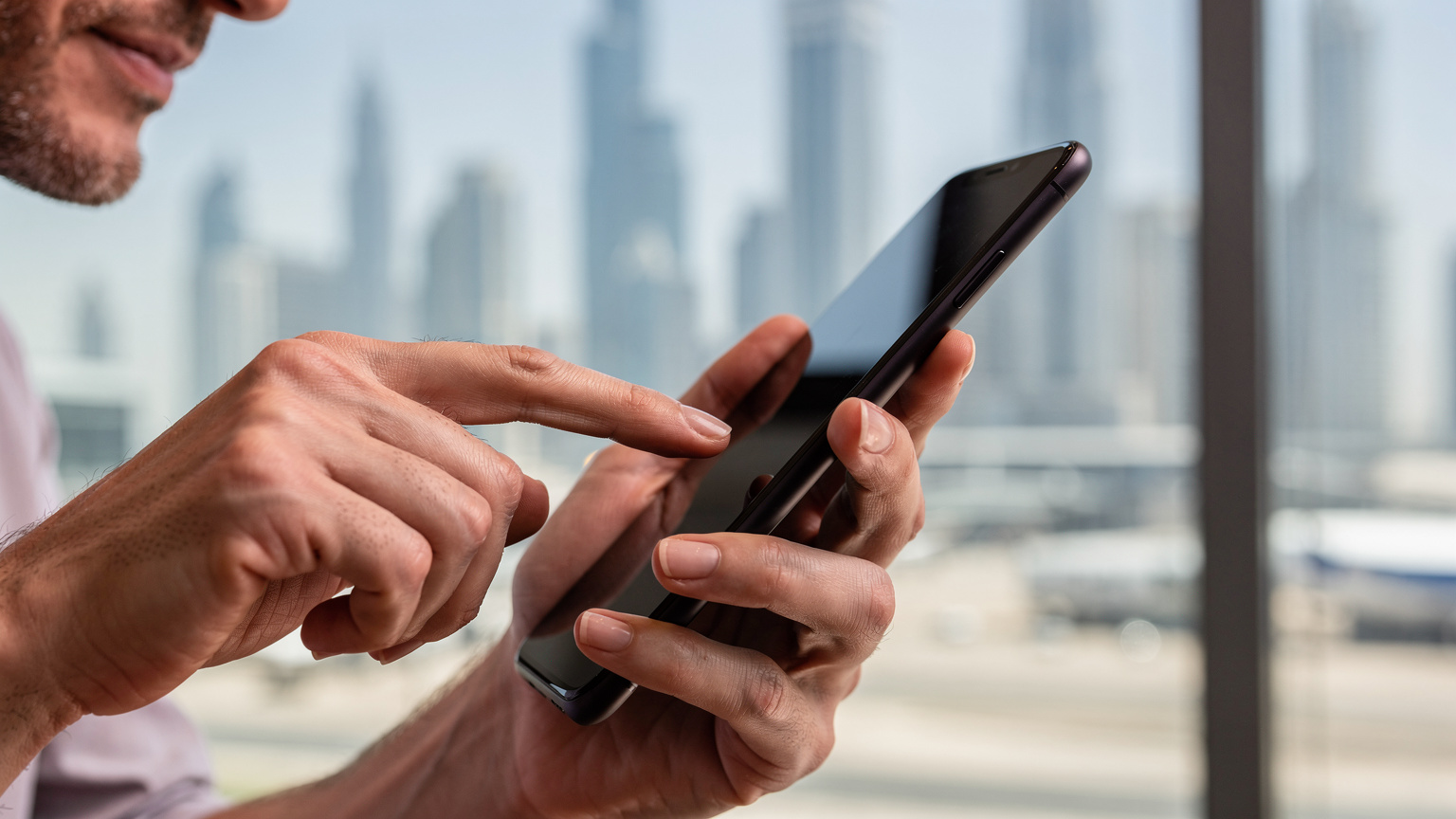
Dubai is a city of vast distances and rapid development. From the historic Al Fahidi neighbourhood, with its wind-tower architecture, to the dizzying heights of the Burj Khalifa in Downtown Dubai, and the expansive shopping malls, reliable navigation and communication are essential. Whether you’re booking tickets for the Dubai Frame, checking the schedule for the Dubai Metro (which runs from around 5 AM to midnight, with shorter hours on Fridays), or simply finding the nearest ATM, your phone is your lifeline. My global eSIM kept me linked to the city's pulse, ensuring I could always find my way from the Gold Souk in Deira to the pristine beaches of Jumeirah.
| Carrier in Dubai (2026) | Key Areas of Coverage | Typical 5G Speed |
|---|---|---|
| Etisalat | Excellent, almost ubiquitous coverage across UAE, strong in urban and rural areas | 300-500 Mbps |
| Du | Very strong in major cities, good coverage in suburban areas | 280-450 Mbps |
The connectivity in Dubai is generally robust, with both Etisalat and Du offering high-speed 5G. A global eSIM that intelligently switches between these networks ensures you get the best possible signal, whether you're deep inside a mall or out in the desert on a safari. This kind of seamless network hopping is what differentiates a truly global plan from a patchwork of local options. It's also vital for professionals who need constant, uninterrupted access, a point we explored in detail in Global Business Connectivity 2026.
Business and Leisure, Uninterrupted
Many travelers find themselves in Dubai for a mix of business and pleasure. Imagine needing to join a video conference call from your hotel room in Jumeirah Lakes Towers (JLT) in the morning, then heading out to the Dubai Marina for an evening dhow cruise. A stable internet connection is non-negotiable for both. I've personally experienced the frustration of a dropped signal during an important call while abroad, a pain point that a reliable global eSIM easily sidesteps. It means you can stay productive and enjoy your leisure time without worrying about your connection failing you.
Sydney: From the Harbour to the Northern Beaches
My final leg brought me to Sydney, a city that feels both sprawling and incredibly connected by its beautiful harbour. My global eSIM simply continued to work, switching to an Australian network as my plane touched down at Sydney Kingsford Smith Airport (SYD). No frantic search for an Optus or Telstra store, no waiting in line. Just a quick check of Google Maps to see the quickest route on the Sydney Trains T8 line into the city, then a ferry from Circular Quay to Manly.

Exploring Sydney's Coastal Vistas
Sydney's charm lies in its diverse neighbourhoods and stunning coastline. From the bustling Central Business District (CBD) and the historic Rocks area to the laid-back vibe of Bondi Beach and the more distant Northern Beaches like Palm Beach (where 'Home and Away' is filmed, if you're a fan), you'll be moving around a lot. Whether you're checking bus schedules for Transport for NSW, reserving a table at a cafe in Surry Hills, or simply sharing a stunning sunset photo from Mrs Macquarie's Chair, data connectivity is paramount. My global eSIM kept me linked to everything, from the latest surf report at Bondi to the opening hours of the Art Gallery of New South Wales (typically 10 AM to 5 PM, Thursdays until 9 PM).
| Carrier in Sydney (2026) | Key Areas of Coverage | Typical 5G Speed |
|---|---|---|
| Telstra | Widest coverage across Australia, strong in metro and regional areas | 350-600 Mbps |
| Optus | Excellent coverage in urban centers, good regional presence | 300-550 Mbps |
| Vodafone AU | Strong in major cities, improving regional coverage | 280-500 Mbps |
Australia boasts excellent mobile infrastructure, particularly in major cities like Sydney. A global eSIM that can tap into Telstra, Optus, and Vodafone AU provides unparalleled coverage and speed. This flexibility is particularly useful if you decide to venture further afield from the city, perhaps up the coast to the Central Coast or even out to the Blue Mountains. It's the kind of dependable connection that makes a difference, especially when you're relying on apps for everything from public transport (think Opal card for seamless travel) to local restaurant recommendations.
The Cost-Saving Advantage
Consider the cumulative cost. Three local SIMs, each costing maybe $20-30 AUD for a decent data package, plus the time spent acquiring them. Compare that to one global eSIM plan, often available for a similar total price, that covers all three destinations and more, without the hassle. The savings aren't just monetary; they're in time, stress, and avoided headaches. This is particularly true for long-term travellers or digital nomads, where every dollar and every minute counts, a topic explored further in our guide to Bali Digital Nomad 2026: Your No-Nonsense eSIM Guide.
What to Look For in a Global eSIM Plan for 2026
Not all global eSIMs are created equal. Just like choosing a reliable travel backpack, you need to consider the specifics. For a multi-country itinerary touching places as diverse as Rio, Dubai, and Sydney, a few key features become non-negotiable.
Broad Country Coverage and Multi-Network Access
The primary advantage of a global eSIM is its reach. Ensure the plan explicitly covers all your intended destinations, and ideally, offers access to multiple local networks within each country. This redundancy is crucial. If one network is experiencing issues (say, a localized outage in Rio's Barra da Tijuca district), your eSIM should automatically switch to another available partner network, keeping you online. Always check the provider's coverage map before purchasing.
Data Allowance and Validity Period
Think about your data consumption habits. Are you a heavy streamer, or just checking emails and maps? A global plan should offer flexible data packages, from a few gigabytes to unlimited options, with validity periods that match your trip duration. For a multi-month, multi-continent journey, a 30-day or even 90-day plan might be more economical than constantly topping up shorter-term packages.
- Assess your data needs: Estimate how much data you typically use. Streaming video and frequent video calls consume much more than basic browsing and messaging.
- Consider validity: Choose a plan whose validity period comfortably covers your entire travel window. Many global plans offer 7, 15, 30, 60, or 90-day options.
- Check for top-up options: Ensure it's easy to add more data if you run out while abroad. This avoids unexpected disconnections.
Transparent Pricing and No Hidden Fees
One of the biggest benefits of eSIMs is avoiding bill shock. A reputable global eSIM provider will have clear, upfront pricing. Beware of plans that advertise low initial costs but then hit you with exorbitant overage charges or confusing expiry rules. Always read the fine print regarding data rollover, speed throttling, and renewal policies. For instance, some plans might offer 'unlimited' data but throttle speeds significantly after a certain threshold, which isn't ideal if you're trying to upload large files for work.
24/7 Customer Support
When you're halfway across the world and your data suddenly stops working, good customer support is invaluable. Look for providers that offer 24/7 support through multiple channels, such as chat, email, or even phone. (I once spent an hour trying to troubleshoot an eSIM issue with a provider that only offered email support, which was useless when I had no data!) A responsive support team can make all the difference when you're in a bind.
Setting Up Your Global eSIM: A Step-by-Step Guide
Activating a global eSIM is surprisingly straightforward, especially if you have a modern smartphone (like an iPhone 17 or a recent Android flagship). The process has become incredibly streamlined over the past couple of years.
- Purchase your global eSIM plan: Visit the provider's website, select your global plan (covering multiple regions), and complete the purchase. You'll typically receive a QR code or manual activation details via email.
- Access your phone's cellular settings: On an iPhone, go to Settings > Cellular > Add eSIM. On Android, it's usually Settings > Network & internet > SIMs > Add eSIM.
- Scan the QR code: Use your phone's camera to scan the QR code provided by the eSIM provider. If you're using the same phone to view the QR code, you can usually enter the details manually.
- Label your eSIM: Give your new eSIM a clear label, like 'Travel Data' or 'Global eSIM,' to differentiate it from your primary SIM. This is crucial for managing which line uses data, especially when you have multiple eSIMs or a physical SIM.
- Set up data roaming: Once activated, ensure data roaming is enabled for your new eSIM line and that it's selected as your primary line for cellular data when abroad. You can often keep your home SIM active for calls and texts if you wish, disabling its data roaming to avoid charges.
- Test your connection: As soon as you land in your first destination, or even before you leave if the plan allows, check your connection. Open a browser or a messaging app to confirm you have data. If not, try restarting your phone or checking the APN settings (though most eSIMs configure this automatically).
Managing Multiple eSIMs
Many modern phones allow for multiple eSIM profiles. This is incredibly useful for frequent travelers. You might have your home eSIM, a global eSIM for long trips, and perhaps a specialized regional eSIM for a specific continent, like one focused solely on South America overlanding. The key is knowing how to switch between them effectively and ensuring you're using the correct one for data in any given country.
Troubleshooting Common eSIM Connectivity Issues
Even with the most reliable global eSIM, occasional hiccups can occur. It's rare, but knowing a few quick fixes can save you a call to customer support (and your sanity).
- Restart your device: The oldest trick in the book, but often the most effective. A simple restart can resolve many temporary network registration issues.
- Check data roaming settings: Double-check that data roaming is enabled for your eSIM profile and that it's selected as the primary source for cellular data.
- Verify APN settings: While usually automatic, sometimes manual APN (Access Point Name) configuration is needed. Your eSIM provider's support pages will have the correct settings. This is a common fix for Android users.
- Manually select a network: In your phone's cellular settings, you can often manually select an available network. If your eSIM supports multiple carriers, try switching to a different one to see if that resolves the issue.
- Ensure adequate balance/data: Confirm your eSIM plan hasn't expired or run out of data. Most providers send notifications, but it's worth a quick check on their app or website.
When to Contact Support
If these steps don't resolve your issue, it's time to reach out to your eSIM provider's customer support. Have your account details, phone model, and a clear description of the problem ready. The more information you provide, the faster they can help. Remember, they are often your best resource when you're in a foreign country and facing connectivity challenges.
"I've been in situations where I couldn't get my phone to connect after landing, even with an active eSIM. A quick chat with support usually reveals it's a minor setting I overlooked, or sometimes, a brief network hiccup on their end. It's why I always prioritize providers with 24/7 chat support. Being stuck in Jakarta with no data and no way to call a taxi is not my idea of a fun start to a trip. This is one of the reasons to be wary of Jakarta 2026 eSIM Scams, where support might be nonexistent."
The Future of Global Connectivity in 2026 and Beyond
The travel landscape is constantly evolving, and so is connectivity. In 2026, global eSIMs are not just a convenience; they're becoming the standard for intelligent, cost-effective international travel. The days of hunting for local SIMs or dreading roaming bills are quickly fading into memory, replaced by a single, seamless digital solution.
eSIMs and the Digital Nomad Lifestyle
For digital nomads and long-term travelers, the shift to global eSIMs is revolutionary. It offers the flexibility to move between countries, maintain a consistent professional presence, and access local services without interruption. Imagine spending a month working from a co-working space in Lisbon's Chiado district, then flying to Medellín for a few weeks, all while staying connected on the same data plan. This is the freedom that global eSIMs provide. It’s not just about saving money; it’s about enabling a lifestyle that was previously far more complicated to manage.
The Environmental Impact
While often overlooked, the environmental benefit of eSIMs is also worth noting. Eliminating the production and disposal of countless plastic SIM cards contributes to a slightly greener travel footprint. It's a small change, but every bit helps in our collective effort to travel more responsibly.
Innovation on the Horizon
As 2026 progresses, expect further innovation in the eSIM space. We're likely to see more dynamic pricing models, even wider global coverage, and deeper integration with travel apps. Perhaps even eSIMs that automatically activate based on your GPS location, further streamlining the experience. The goal remains the same: making international travel connectivity so effortless, you barely notice it's there. That's the hallmark of truly intelligent travel in the modern era.
Frequently Asked Questions
Can I use one global eSIM for all three cities, Rio, Dubai, and Sydney?
Yes, a well-chosen global eSIM plan for 2026 will cover all three destinations. These plans are designed to switch to local partner networks in each country, providing seamless data connectivity without needing to change physical SIM cards.
How do I avoid high roaming charges in these countries?
To avoid high roaming charges, deactivate data roaming on your home physical SIM card and use a global eSIM for all your data needs. Global eSIM plans offer significantly lower per-gigabyte rates compared to traditional carrier roaming packages.
What kind of speeds can I expect with a global eSIM in Rio, Dubai, and Sydney?
In major urban areas of Rio, Dubai, and Sydney, you can generally expect 5G speeds ranging from 200 Mbps to over 500 Mbps, depending on the local partner network your eSIM connects to and network congestion at the time. Coverage and speed might vary in very remote areas.
Is it difficult to set up a global eSIM on my phone?
Setting up a global eSIM is typically straightforward. Most providers offer activation via a QR code that you scan with your phone's camera, or through manual entry. The process usually takes less than five minutes, and detailed instructions are always provided.
Can I keep my existing phone number while using a global eSIM for data?
Absolutely. You can use a global eSIM for data while keeping your primary physical SIM (or another eSIM) active for calls and texts with your original phone number. You simply designate the global eSIM as your data-only line in your phone's cellular settings.
What if my global eSIM doesn't work in one of the cities?
If you encounter connectivity issues, first try restarting your phone and verifying your data roaming settings. If the problem persists, contact your eSIM provider's customer support. Reputable providers offer 24/7 assistance to troubleshoot and resolve issues quickly.